How Does a Watch Winder Work?

Pick up your automatic watch after a few days in the drawer. It has stopped. You wind it by hand, set the time, and wear it, only to repeat the same ritual next week. A watch winder solves that completely. But how does a watch winder actually work, and why does your movement need it? This guide covers the full picture: from the mechanics inside your movement to the motor turning on your shelf.
The Core Principle
An automatic watch winds itself through motion. Inside the case, a weighted rotor pivots freely on a central axis. Each time your wrist moves, the rotor swings. That swing is converted into rotational energy, transmitted through a series of gears to the mainspring, tensioning it incrementally. The mainspring stores this energy and releases it steadily to power the movement.
When you stop wearing the watch, the rotor stops moving. After roughly 38 to 72 hours (sometimes less, depending on the power reserve of the calibre), the mainspring runs down and the watch stops. Restarting it means manual winding and resetting every complication: date, day, moon phase, or dual time zone.
A watch winder replicates the motion of your wrist mechanically, keeping the mainspring tensioned. It holds the watch in a cushioned cradle that rotates on a motorised platform, typically in programmed cycles, a set number of rotations followed by a rest period. The rotor inside your watch responds exactly as it would on a living wrist.
A Brief History Worth Knowing
The principle behind every automatic watch today traces back to the late eighteenth century. Around 1770, the Genevan watchmaker Abraham-Louis Perrelet experimented with a pocket watch that wound itself through the wearer's body movements. Abraham-Louis Breguet developed and refined the concept into his celebrated montre perpetuelle by 1777, establishing the term collectors still use today.
The real leap to the wrist came in 1923, when British watchmaker John Harwood patented the first self-winding wristwatch with an oscillating mass. And in 1931, Rolex introduced the Oyster Perpetual with a rotor capable of full 360-degree rotation, the design that set the standard for virtually every automatic movement made since. The watch winder is the natural companion to nearly a century of that engineering refinement.
Inside the Watch Winder: Motor, Direction, and Turns Per Day
The motor
At the heart of a watch winder is a small electric motor, typically a quiet, low-torque unit designed to run continuously without vibration. Quality winders use motors with near-silent operation so the device can sit on a nightstand without becoming an irritant. The motor drives a rotating platform on which the watch cradle is mounted.
Rotation direction
Not all automatic movements wind in both directions. Some wind only clockwise, some only counter-clockwise, and many wind bi-directionally. A good watch winder offers settings for clockwise, counter-clockwise, and alternating rotation. If your winder only rotates in one direction and your movement winds in the opposite, the rotor will spin freely without engaging the winding mechanism, and your watch will still stop.
Turns per day (TPD)
Watchmakers specify how many rotor turns per day a given movement requires to stay wound. This figure varies between calibres. A common range falls between 650 and 1,950 turns per day, though most modern movements need somewhere in the lower half of that range. Quality winders allow you to programme the TPD setting so the motor runs for precisely the right duration. A well-set winder runs in cycles, resting between rotation intervals, which is exactly how a movement behaves on a wrist you actually wear.
| Movement Type | Typical Power Reserve | Direction |
|---|---|---|
| Rolex Perpetual (most calibres) | 48 to 70 hours | Bi-directional |
| Omega Co-Axial | Around 60 hours | Bi-directional |
| Patek Philippe (many calibres) | 38 to 55 hours | Varies by calibre |
| ETA 2824 (many mid-range pieces) | 38 to 42 hours | Bi-directional |
Always verify the specific TPD requirement for your calibre in its technical documentation. The figures above are general references only. For exact settings by brand, see our watch winder turns per day guide.
The Clutch Mechanism: Why Over-Winding Is Not a Real Risk
One question collectors often raise: can a watch winder over-wind a movement? The short answer is no, provided the winder is running reasonable cycles. Every modern automatic movement includes a slipping clutch mechanism in the winding gear train. Once the mainspring is fully tensioned, the clutch disengages, allowing the rotor to continue spinning without adding further stress to the spring. The energy dissipates rather than transferring. This is a deliberate engineering feature, not an afterthought. For the full picture, including the rare cases where a cheap, vibrating motor can cause trouble, read whether a watch winder can overwind a watch.
Aggressive TPD settings far in excess of your movement's specification are worth avoiding not because of over-winding risk but because unnecessary continuous rotation adds wear to the winding gears over very long periods. Set it right once and leave it alone.
"A watch that stops is a watch that forgets. Every complication reset by hand is time the movement was not earning."
Single, Double, and Multi-Watch Winders: Choosing the Right Format
Watch winders come in formats from a single cradle to cabinets housing a dozen or more timepieces. The right choice depends on how many automatic watches you rotate regularly.
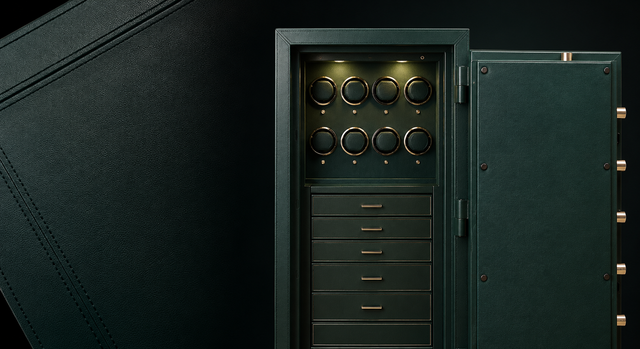
A single watch winder suits a collector who wears one automatic piece daily and wants a second kept ready. A double winder is the most practical starting point for two-watch rotations. For collectors with four or more automatics, a quad or six-position winder keeps the entire rotation ready without needing to reset any watch before wearing it. Browse the full Windury collection to see the most popular formats.
What to Look for in a Quality Watch Winder
Not all watch winders are built equally. These features separate a reliable winder from a decorative box with a motor:
- Programmable TPD: essential for matching your specific movement's requirement.
- Selectable rotation direction: clockwise, counter-clockwise, and alternating as a minimum.
- Quiet motor: a winder that buzzes or vibrates is a winder you will eventually switch off.
- Secure watch cushion: the cradle should hold your watch firmly without contact stress on the crystal or bracelet.
- Power backup: battery operation as an alternative to mains prevents a power cut from stopping the watch you were trying to keep running.
At Windury, every winder in our range is selected to deliver the mechanics that matter: programmable rotation, directional control, and quiet operation, in a finish that belongs on a collector's shelf. The right winder is the simplest upgrade your watches will never stop thanking you for. Still deciding? Read do you need a watch winder for an honest take. Questions about settings? Visit our FAQ page.
Frequently Asked Questions
Do I need a watch winder for every automatic watch I own?
Only for the automatic watches you are not wearing regularly. If a watch sits unworn for more than its power reserve (typically 38 to 72 hours depending on the calibre) it will stop and require resetting. A winder is most useful for pieces with complicated dials where resetting is time-consuming. Watches worn daily do not need a winder.
Can a watch winder damage my automatic watch?
A well-programmed winder running appropriate TPD cycles poses no meaningful risk to a healthy movement. Modern automatic calibres include a slipping clutch that prevents the mainspring from over-tensioning. The main point is to use the correct rotation direction and a reasonable turns-per-day setting, both of which are adjustable on any quality winder.
What is the difference between a watch winder and a watch box?
A watch box is static storage. It protects your watches from dust and scratches but does nothing to keep them wound. A watch winder is a motorised device that actively rotates your automatic watch to keep the mainspring tensioned. Many winders also include static storage compartments for watches not being actively wound, combining both functions in one unit.
DON'T LET A SINGLE WATCH STOP
Keep every watch ready to wear.
A winder keeps your automatic wound, accurate and ready. No resetting the date, no winding by hand. Find the one built for your collection.
Shop watch winders