Do You Need a Watch Winder? Honest Answer

It is the first question most automatic watch owners ask when their second or third timepiece arrives into the rotation. Do you actually need a watch winder, or is it a luxury accessory solving a problem you do not really have? The honest answer: it depends on how you wear your watches. This guide tells you exactly when a winder earns its place, and when it does not.
It Starts with How Automatic Watches Work
An automatic watch runs on mechanical energy stored in a mainspring. While you wear it, a rotating weight called the rotor spins freely with your wrist movement and winds that spring continuously. The moment the watch sits still, the rotor stops, the spring gradually unwinds, and the movement eventually halts.
How quickly? Most modern automatic movements have a power reserve somewhere between 38 and 72 hours. Some high-end calibres stretch further. But stop wearing a watch for two or three days and you will come back to a stopped timepiece, a blank date window, and the minor ritual of resetting hands and complications before you can put it on.
A watch winder keeps the rotor turning while the watch rests, maintaining the power reserve and keeping the time correct. Whether that function solves a real problem for you depends entirely on your collection and your habits.
When a Watch Winder Is Genuinely Worth It
You own more than one automatic watch
If you rotate between two or more automatic timepieces, this is where a winder pays for itself in convenience alone. Wearing one watch means the other stops. Switching to it means resetting time, date, and any complications: a GMT second timezone, an annual calendar, a perpetual date. The more complex the movement, the longer and more irritating the reset. A double watch winder keeps both ready at all times. You pick up the watch, you put it on.
Your watch has complex complications
A simple three-hand date watch takes thirty seconds to reset. A moonphase or annual calendar can take several minutes, and some perpetual calendar movements require specific correction sequences to avoid damaging the mechanism. If your rotation includes a watch with significant complications, stopping and restarting it repeatedly is not just inconvenient: it is unnecessary wear on the correctors. A winder eliminates the problem entirely.
You travel frequently and rotate collections
Frequent travellers who keep watches at home often return to find their automatic pieces have been stopped for a week or more. Resetting multiple watches after a trip is a low-level annoyance that compounds quickly. A winder running at home means everything is current when you land.
You want to care for the movement long-term
Automatic watches are lubricated inside. Those lubricants benefit from regular movement: they stay distributed across the gear train and escapement rather than pooling or drying unevenly during long periods of static storage. Many independent watchmakers suggest that keeping an automatic in motion, even gently, supports consistent lubrication over years of ownership. A winder does exactly that.
"A watch that stops is a watch that forgets. Its complications, its momentum, its readiness for your wrist."
When You Probably Do Not Need a Watch Winder
Equally honest: if you own a single automatic watch and wear it every day without exception, you do not need a winder. Your wrist is doing the job already. The rotor is spinning, the mainspring is wound, the watch never stops.
Similarly, if you own quartz watches exclusively, a winder serves no purpose. Quartz movements are battery-powered and indifferent to motion.
And if your automatic sits unworn for months at a time, a sentimental piece worn once or twice a year, a winder running continuously for 350 days to prepare it for four occasions is overkill. A clean watch box and the occasional wind by hand before wearing is the right answer there.
Quick Verdict
Get a watch winder if:
- You own two or more automatic watches and rotate between them
- Any of your watches has a date, moonphase, GMT, or calendar complication
- You travel and leave watches at home for days at a time
- Resetting watches is something you do often enough to find it irritating
Skip it if: you wear one automatic watch daily without rotation, or your collection is quartz.
Does a Watch Winder Damage Automatic Watches?
This concern comes up regularly, and it deserves a direct answer. A quality watch winder set to appropriate turns-per-day (TPD) settings does not damage an automatic watch. Modern automatic movements include a slip-clutch mechanism. Once the mainspring is fully wound, the rotor simply disengages. The spring cannot be over-wound by a winder any more than it can be over-wound by wearing the watch daily.
The caveat is settings. Different movements have different winding direction preferences and TPD requirements. Rolex calibres wind bi-directionally and typically need fewer daily turns than some other manufacturers recommend. Setting a winder to an appropriate TPD for your specific watch is good practice. Most quality winders offer adjustable settings for exactly this reason.
For more on settings by brand, our turns-per-day guide covers the specifics in detail.
What Kind of Watch Winder Do You Actually Need?
Once you have decided a winder makes sense, the choice comes down to capacity and finish. A single watch winder is the right starting point for collectors with one automatic that regularly sits idle. A double is the natural step for a two-watch rotation. It handles both without compromise, and many double models add a storage compartment for additional pieces or straps.
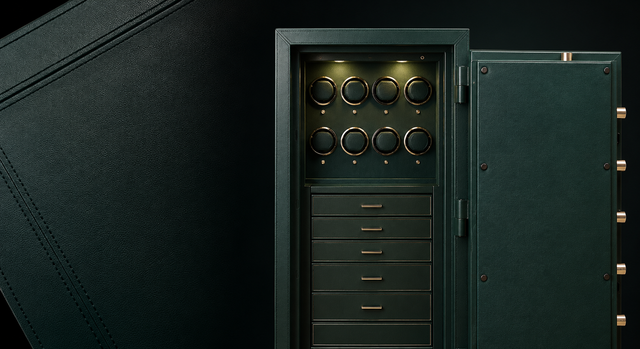
For collections of four, six, or more automatic watches, multi-watch winders offer the same convenience scaled up. The principle is identical; the capacity grows with the collection.
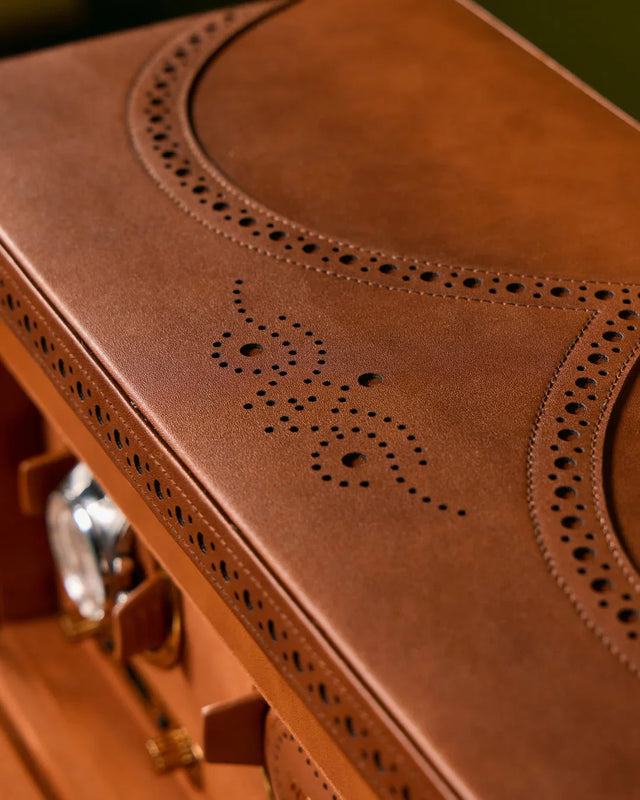
On finish: carbon fibre and leather are the two dominant materials in the watch winder market, and neither is objectively better. Carbon suits a modern, minimal aesthetic and handles well in humidity. Leather reads as more traditional and pairs naturally with classic movements. The watch on your wrist often answers the question.
Frequently Asked Questions
Is a watch winder worth it for one watch?
If you wear that one watch every single day, probably not. Your wrist keeps it wound. But if you have days where you do not wear it, or you travel without it, even a single watch benefits from a winder. The convenience of picking it up already set and running is real.
Can a watch winder damage my automatic watch?
A quality winder set to the correct turns-per-day for your movement will not damage it. Automatic calibres include a slip-clutch that prevents over-winding. The key is matching the winder's rotation settings to your watch manufacturer's recommendations.
What is the difference between a watch winder and a watch box?
A watch box is passive storage: it protects your watches from dust and scratches but does nothing to maintain the power reserve. A watch winder is active: it rotates the watch continuously to simulate wrist movement and keep the movement wound. Many double and triple winders combine both: motor-driven slots plus padded storage for additional pieces.
At Windury, we believe every automatic watch deserves to run. Not because a stopped watch is broken, but because the moment you reach for it, it should be ready. Browse our watch winders or visit the FAQ if you have more questions.
DON'T LET A SINGLE WATCH STOP
Keep every watch ready to wear.
A winder keeps your automatic wound, accurate and ready. No resetting the date, no winding by hand. Find the one built for your collection.
Shop watch winders