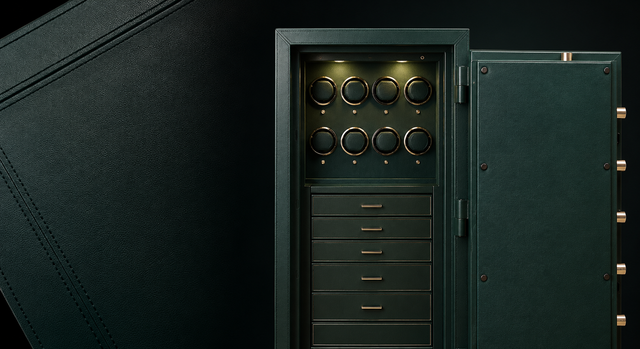
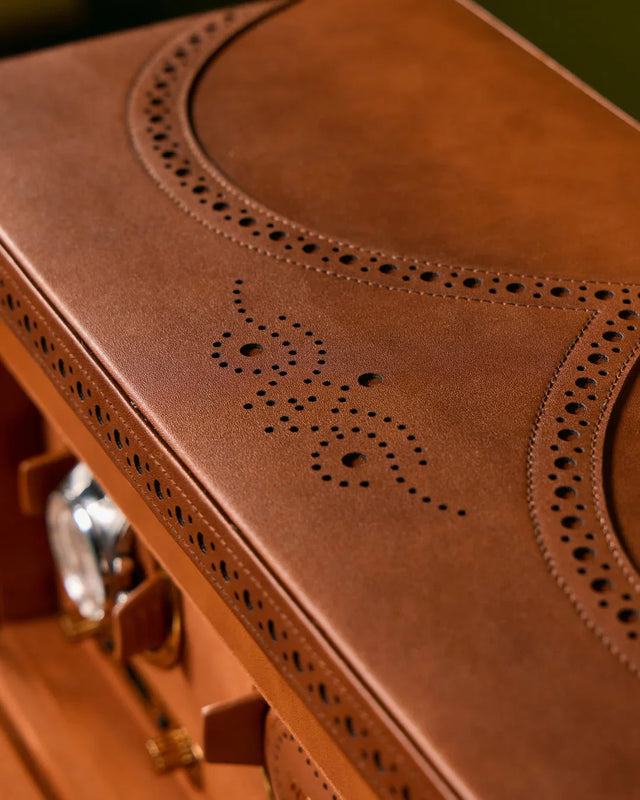
Watch Winder vs Watch Box: Which One Do You Need?

You own at least one automatic watch. Maybe two. And at some point, probably while reaching for a watch that had stopped overnight, you started wondering whether there was a better way to store it. There is. The question is which way is right for you.
A watch box and a watch winder look deceptively similar from the outside. Both sit neatly on a shelf. Both protect your timepieces from dust and minor knocks. But they do fundamentally different things. Choosing the wrong one means either overspending on a feature you do not need, or leaving your movement quietly losing ground every time it stops.
What Is the Real Difference?
A watch box is passive storage. It holds your watches in a cushioned compartment, protected from dust, light, and physical damage. It is ideal for watches you wear daily, quartz watches that keep time regardless of movement, or pieces you are setting aside for a period. Nothing rotates. Nothing winds. It is a display case with padding.
A watch winder is active storage. It rotates the watch continuously, mimicking the motion of a wrist, so the automatic movement's rotor keeps transferring energy to the mainspring. When you pick up a winder-stored watch, it shows the correct time and date, fully powered, ready to wear. No resetting. No remembering the day of the month.
"A watch that stops is a watch that forgets. A winder keeps it exactly where you left off."
How Automatic Movements Work, and Why It Matters for Storage
Every automatic movement relies on a weighted rotor that spins when your wrist moves. That spin transfers energy through a series of gears to the mainspring, which powers the watch. When the watch sits still long enough, the mainspring runs down and the watch stops.
For a single watch you wear every day, this is rarely a problem. Daily wear keeps the power reserve topped up. But for collectors who rotate between two or more watches, or anyone who travels frequently, the calculation changes. A watch left in a box for several days needs to be wound manually and reset before wearing. On a simple three-hand watch, that takes thirty seconds. On a timepiece with a perpetual calendar, moon phase, or annual calendar complication, it can take considerably longer. Frequent resetting adds wear to the setting mechanism over decades.
Watch Winder or Watch Box: A Direct Comparison
| Feature | Watch Winder | Watch Box |
|---|---|---|
| Keeps automatic watch wound | Yes | No |
| Works with quartz watches | Not needed (quartz needs no winding) | Yes |
| Protects from dust and knocks | Yes | Yes |
| Displays the collection | Often, glazed lid options available | Often, glazed lid options available |
| Requires power | Yes, mains or battery | No |
| Ideal for collectors rotating two or more automatics | Yes | Not optimal |
| Ideal for quartz-only collection | No benefit | Yes |
When a Watch Box Is Enough
If you own a single automatic watch and wear it every day, a quality watch box is perfectly sufficient. Daily wrist time keeps the movement powered. A well-cushioned box protects the case and crystal from dust and casual impact when the watch is not on your wrist.
Watch boxes are also the right choice for quartz pieces, dress watches worn only on special occasions (where you are happy to set them before each wear), or a collection you are building slowly and not yet rotating. They are simpler, quieter, and cost less to run.
When You Genuinely Need a Watch Winder
The case for a winder strengthens the moment you start rotating between multiple automatic watches, typically two or more. If your second watch sits in a box for four or five days, it will stop. You will reset it. You will do this hundreds of times over the life of the watch.
A single watch winder solves this for one piece. A double watch winder handles two, which is the sweet spot for many collectors who keep one everyday piece and one dress or sport watch. If your collection is growing, a winder with multiple rotors means every watch in the rotation is always ready.
Complications also tip the balance firmly toward a winder. A perpetual calendar or annual calendar stores years of date logic in its gears, logic that needs to be re-engaged manually when the watch stops. Many serious collectors consider a winder an investment in the longevity of those setting mechanisms, not just a convenience.
A Note on Over-Winding
A common concern is whether a winder can damage a watch by over-winding it. Modern automatic movements are designed with a slipping clutch in the mainspring that prevents over-tension, so the movement itself will not be harmed by continuous rotation. What matters is choosing the right turns-per-day (TPD) setting for your specific movement. Most watch manufacturers publish recommended TPD ranges. Setting a winder correctly and leaving it on bi-directional rotation at a moderate TPD is all that is required.
If you are unsure of your watch's requirements, our turns-per-day guide covers the specifics by brand. And our FAQ page answers the most common questions collectors ask before buying.
Quick Answers
Can I use a watch winder for a quartz watch?
There is no benefit to placing a quartz watch in a winder. Quartz movements are battery-powered and do not use a rotor. Rotation does nothing for them. A watch box is the appropriate storage for quartz pieces.
Is a watch winder bad for my automatic watch?
A well-set winder is not harmful. Modern automatic movements include a slipping-clutch mechanism that prevents over-tension in the mainspring. The key is using the correct turns-per-day setting for your movement. When in doubt, check your manufacturer's guidelines or start at a moderate bi-directional setting.
Do I need a winder if I only own one automatic watch?
If you wear that watch daily, probably not. Daily wrist activity keeps the power reserve topped up. A winder becomes genuinely useful when you rotate between two or more automatics, travel frequently, or own a watch with complex calendar complications that are time-consuming to reset.
At Windury, we make the case for the winder simply: if your watches are worth wearing, they are worth keeping ready. Explore our full watch winder range, built for collectors who take their movements seriously.
DON'T LET A SINGLE WATCH STOP
Keep every watch ready to wear.
A winder keeps your automatic wound, accurate and ready. No resetting the date, no winding by hand. Find the one built for your collection.
Shop watch winders